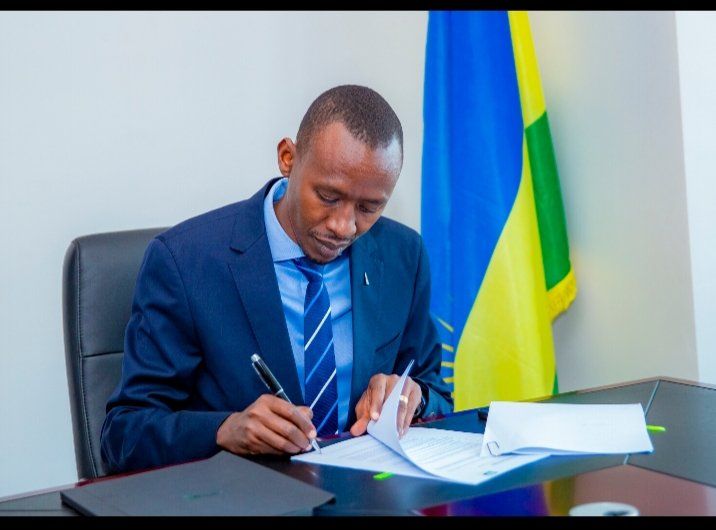
RWANDAN COMMUNITY IN PERTH MARKS THE 32ND COMMEMORATION OF THE GENOCIDE AGAINST THE TUTSI
Perth, 11 April 2026 - The Rwandan Community in Perth, Western Australia, alongside local leaders and friends of Rwanda, gathered to mark the 32nd commemoration of the 1994 Genocide against the Tutsi in Rwanda.
The commemoration was held at Stirling Civic Gardens, home to a genocide memorial stele honouring victims of the 1994 Genocide against the Tutsi in Rwanda, which was inaugurated in May 2024. During the event, young children took turns on stage reading aloud the names of dozens of victims under the age of twelve from across Rwanda, whose lives were brutally cut short during the genocide.

In a deeply heart-wrenching and raw testimony, Jules Maniraguha, a genocide survivor from Ntarama in Bugesera District, recounted years marked by fear, violence, and survival before and during the genocide.
Maniraguha, 46, recalled that following the launch of the liberation struggle by the Rwanda Patriotic Army (RPA) on 1 October 1990, several members of the Tutsi population were killed, while others were labelled a “fifth column” and placed under constant surveillance.
He recounted how the 1992 killing of Kanzenze Commune burgomaster Fidèle Rwambuka, then attributed to the RPA Inkotanyi and their alleged collaborators, was used as a pretext for widespread killings of Tutsi civilians in Ntarama and Nyiramatuntu.
Reflecting on the period preceding the Genocide, Mr Maniraguha described how attacks intensified in Ntarama, often launched by armed groups coming from neighbouring areas. While Tutsi elders and youth initially managed to repel these assaults, the situation deteriorated dramatically in 1994.
Before the killings began in his hometown, Maniraguha fled with his mother and younger siblings, embarking on a perilous journey from Ntarama to Kabgayi in Muhanga District.

Along the way, they narrowly escaped death at multiple roadblocks and survived massacres directed against the Tutsi at Mugina Parish and Kivumu Catholic Parish. They eventually found refuge in Kabgayi, where they were rescued by RPA fighters on 2 June 1994.
Maniraguha expressed deep gratitude to the RPA–Inkotanyi for the rescue and to the Government of National Unity for supporting their education.
He urged genocide survivors to allow their accounts to be recorded and shared to counter genocide denial.
“Deniers may deny many things, but they cannot deny the life you lived through,” he said.
Addressing the gathering, Ms Meredith Hammat, Minister for Health and Mental Health of Western Australia, underscored the importance of remembrance, healing, and community solidarity during commemoration.
She paid tribute to Maniraguha’s courage in sharing his testimony during the commemoration and highlighted the significance of learning from history to prevent future atrocities.
“There is a saying that those who do not learn from history are destined to repeat it,” Ms Hammat cautioned, noting that commemorative events play a vital role in ensuring that painful lessons from the past are neither forgotten nor ignored.

Takeaways from Rwanda's Environment Protection Agenda

Kigali City Master Plan scoops two Gold Awards for Master Planning

Rwanda wins bid to host 2025 World Championships
WHO commends Rwanda’s Covid-19 vaccination drive
Inside Rwanda’s efforts to protect mountain gorillas from Covid-19