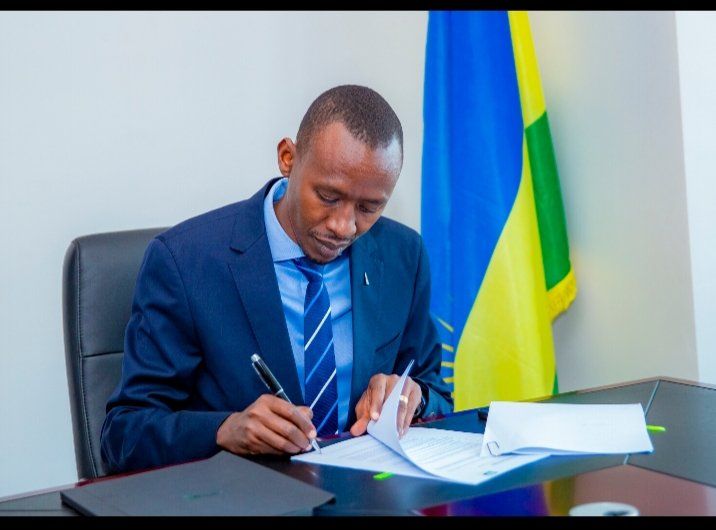
Takeaways from Rwanda's Environment Protection Agenda
Published in the Sun Media publication Indiplomacy Climate Change Special Edition 2021/22, in collaboration with the Ministry of Environment of the Republic of Rwanda.
Rwanda has over the past two decades put the environment at the heart of its development. Today, climate action is embedded across government and increasingly the private sector.
The Intergovernmental Panel on Climate Change (IPCC), has played a pivotal role in making the world’s scientists send out the alarm about the outcomes of climate change and ou responsibility in bringing things to such a pass. Changes in climate are intensifying and exacerbating development challenges. Unless there are immediate, rapid, and large-scale reduction in greenhouse gas emissions, limiting warming to 1.5 degrees Celsius as part of the Paris Agreement will be surely beyond reach.
Rwanda heeds the call to action
There have been huge learning experiences from the fact that Rwanda experiences the impacts of climate change through increased flooding and landslides. The third national communication on climate change indicated that Rwanda was a net carbon sink. However, economic growth in the latter half of the last decade resulted in a significant increase in emissions.
Recognizing the gravity of the situation, Rwanda, in May 2020, became the first African country to submit its updated Nationally Determined Contributions (NDC) to the UNFCCC Secretariat as its commitment to contribute to building a more sustainable World. The NDC climate action plan aims to reduce emissions by 38% compared to business as usual by 2030. Rwanda set itself a bold vision to become a carbon-neutral and climate resilient economy by 2050.
To harness the power of nature, investments in forests, wetlands and land are fundamental. Today, 30.4% of Rwanda is covered with forests and Rwanda is undertaking border-to-border landscape restoration.
Setting the plan in motion
Energy and transport emissions are tackled by phasing out biomass fuel for cooking and introducing aggressive e-mobility incentives. These initiatives will be enhanced by a strong carbon market as well as policies that consider people and the planet to ensure an inclusive and equitable transition to net-zero.
On global issues, Rwanda was among the first countries to ban plastic bags in 2019. Rwanda has also contributed to Africa’s natural World Heritage Sites by gazetting Gishwati-Mukura National Park which is among the World Network of Biosphere Reserves by UNESCO.
Wetlands comprise 10.6% of the country’s territory, with approximately 915 wetlands inventoried. Of these, 38 wetlands - representing about 20% of the total area - are fully protected. A national wetlands management plan and a range of tools are being developed for restoration of degraded wetlands. All of these initiatives and many others earned the country a Green Globe Award in recognition of its efforts to restore the Rugezi-Burera-Ruhondo Wetland in 2010.
Financing the country's climate action plan
Implementation of Rwanda’s climate action plan has been estimated at US $11 billion over the next decade, which is composed of $5.7 billion and $5.3 billion for mitigation and adaptation respectively. Unlocking climate finance and investments from public and private as well as domestic and external sources is critical for resilient and sustainable development.
Rwanda Green Fund
To ensure Rwanda remains strategic and well-coordinated in regards to financing its green growth journey, the Government created the Rwanda Green Fund, locally known as FONERWA, in 2012 to serve as a financing vehicle to implement its climate action plan.
To date, the Fund has mobilized US $217 Million for green investments, and supported 45 green projects across the country. This contributed to the creation of more than 161,000 green jobs as well as building the community’s adaptive capacities to cope with the effects of climate change.
Meanwhile, to keep playing a greater catalytic role to the nation’s green agenda, the Fund, in collaboration with other stakeholders, is in the process of diversifying financial instruments by establishing a Green Investment Facility to catalyze private investments in the country.
Rwanda welcomes partners and investors to support our green growth ambitions as it builds a climate resilient nation.
Read the full publication here.
Takeaways from Rwanda's Environment Protection Agenda

Kigali City Master Plan scoops two Gold Awards for Master Planning

Rwanda wins bid to host 2025 World Championships
WHO commends Rwanda’s Covid-19 vaccination drive
Inside Rwanda’s efforts to protect mountain gorillas from Covid-19