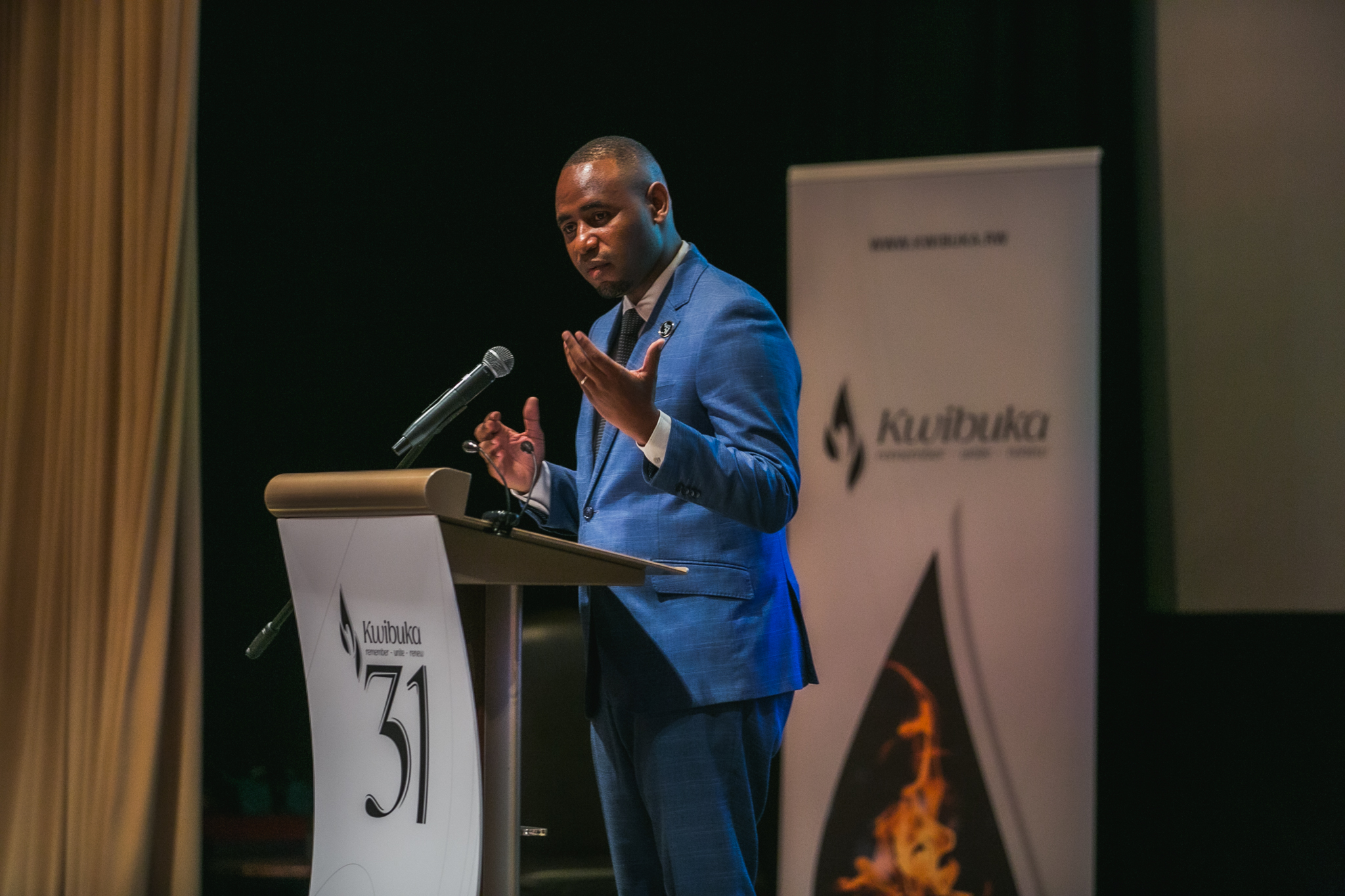
KWIBUKA31: HIGH COMMISSIONER UWIHANGANYE CALLS OUT GLOBAL INDIFFERENCE
Singapore, 07 April 2025 - High Commissioner Jean de Dieu Uwihanganye condemned the international community’s failure to draw lessons from its indifference during the genocide against the Tutsi in Rwanda.
He was speaking at Tanglin Club where Rwandans and friends of Rwanda in Singapore gathered to mark the 31st commemoration of the 1994 genocide against the Tutsi in Rwanda.
“Despite a warning issued by the UN Special Advisor on the Prevention of Genocide, Alice Ndiretu, in April 2024 that there were risk factors for genocide in the Eastern Democratic Republic of Congo (DRC), the international community’s indifference persists”, High Commissioner Uwihanganye noted.
He recalled that the current violence in Eastern DRC is a consequence of the refugee crisis from 1994 when the genocidal government and allied militia forcefully took the Rwandan population across the border into what was then Zaire after killing more than a million Tutsi.
These forces later coalesced into the Democratic Forces for the Liberation of Rwanda (FDLR) a terrorist-designated movement, which remains active in Eastern DRC. Various reports have determined that FDLR received active support and collaboration from the Congolese Armed Forces (FARDC), making it significantly more challenging to eliminate them.
The High Commissioner noted that it is perplexing that the international community has failed to call to account those responsible for the chaos in Eastern DRC but instead placed sanctions on Rwanda for its supposed efforts to prevent the threat of genocide.
He expressed gratitude to the countries that have prosecuted genocide suspects in their judicial systems and those that have extradited them to Rwanda for trial. He also encouraged those who have not yet taken action to follow suit.

The remembrance event, attended by over 250 people including several diplomats accredited to Singapore, featured a panel discussion that reflected on the experience of genocide survivors during the genocide and transmission of memory.
One of the panellists, 17-year-old Leslie Isaro Sheja, hailed Rwanda’s post-genocide leadership for promoting the values of love and peace-building. She noted that as a second-generation genocide survivor, she interacts harmoniously with all her age-mates, regardless of their background.

“A person is not defined by whether their parents are genocide survivors or not. I don't think the impact of knowledge about what occurred during the genocide could control the way I live or interact with people in the way”, Sheja noted.
Fellow panellist Grace Kansayisa, an orthopaedist surgeon and medical fellow at Ng Teng Fong General Hospital, who was barely five when the genocide broke out in 1994, commended the government for extending much-needed support to genocide survivors to rebuild their lives in the aftermath of the genocide.
“My sister trained as a statistician, my brother is a mechanical engineer, and I am a medical doctor. Indeed, it is sad that our father passed away, but we are grateful to the leadership of our country. The government fully sponsored our academic training. Looking back, if it was before the genocide, I am sure we wouldn’t have made it where we are”, Kansayisa said.

Takeaways from Rwanda's Environment Protection Agenda

Kigali City Master Plan scoops two Gold Awards for Master Planning

Rwanda wins bid to host 2025 World Championships
WHO commends Rwanda’s Covid-19 vaccination drive
Inside Rwanda’s efforts to protect mountain gorillas from Covid-19